A private blog network (PBN) is a group of websites built or bought mainly to link to other sites. Owners often use expired domains with existing backlinks, put up just enough content to look like a blog, and sell links or point them at their own money sites.
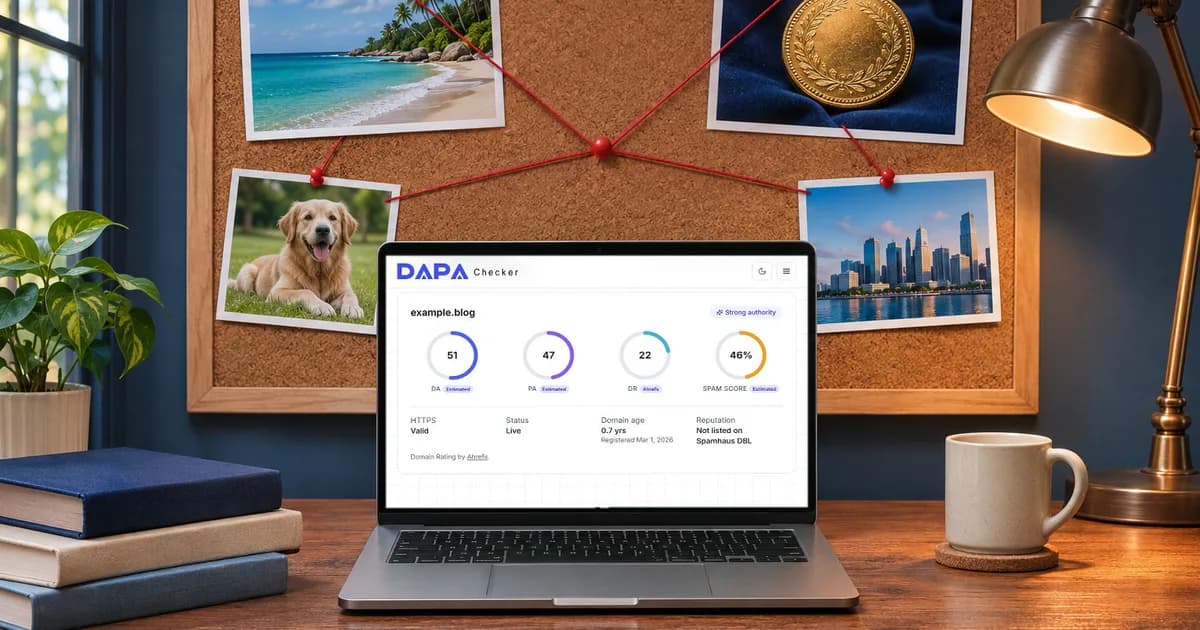
PBN sites tend to look great in an authority checker. That is the point of them. This guide shows the footprints that give them away, so you can tell before you pay for a link.
Why PBN Links Are a Bad Buy
Google's spam policies treat buying or selling links that pass ranking credit as link spam. Google's systems try to detect these links and ignore them, and in serious cases a site can receive a manual action.
So the best case for a PBN link is that it does nothing. The worst case is that it becomes part of a pattern that hurts the site it points to. Either way, you have paid for authority that third-party tools can see but Google likely doesn't count.
Visual guide
Strong Numbers, Thin Reality
Compare Metrics
Large gaps between DA, DR and real traffic are the first clue.
Read the Site
Look for mixed topics, recycled posts and paid link patterns.
Decide
Skip sites that exist mainly to sell links.
Metric Footprints
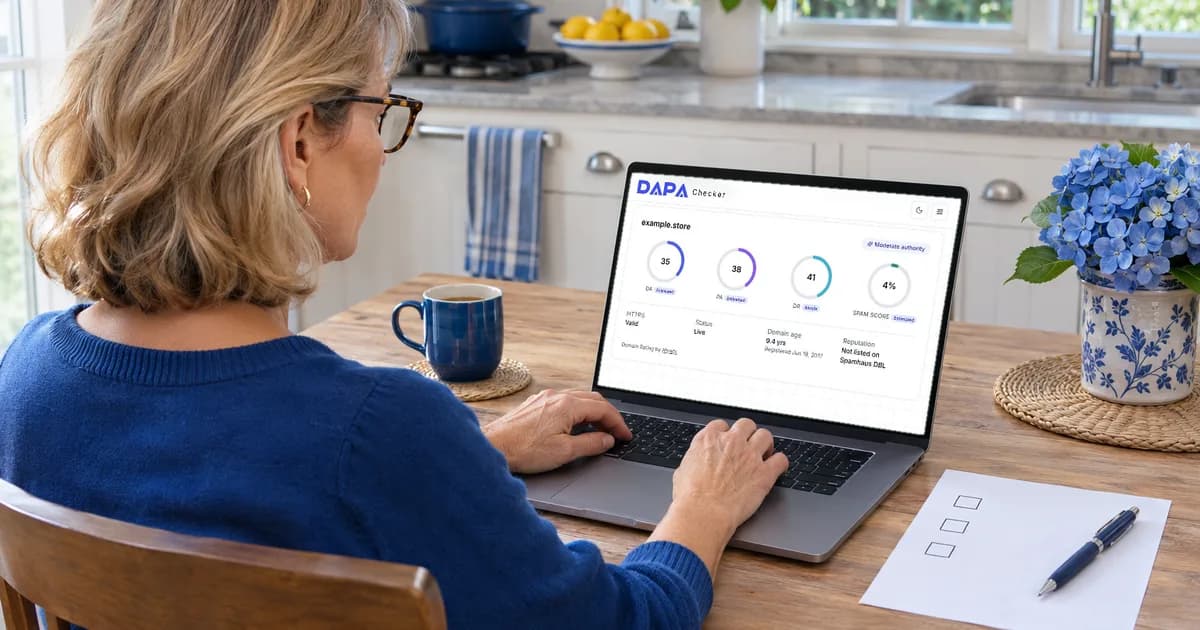
Start with the numbers. Run the site through our DA PA checker, or put a whole list of offered sites into the bulk checker.
Big Gaps Between DA and DR
Moz and Ahrefs build separate link indexes. On genuine sites, DA and DR usually land in the same neighbourhood. PBN owners often target one metric, because that is what buyers ask for, so a gap of 20 to 30 points or more is a common warning sign.

Authority With No Traffic
A real DA 40 site normally gets some search visitors. If a tool you trust shows almost no organic traffic for a site with strong authority, ask why. Sites that exist only to sell links rarely rank for anything themselves.
High Spam Score
PBN sites often share features with penalized sites: thin content, few brand searches and unusual link patterns. A Spam Score above 30% on a high authority site deserves a manual check.
Young Site, Old Links
A domain whose current content is a few months old but whose backlinks go back a decade has probably been dropped and rebuilt. Check the Wayback Machine to see whether today's site has anything to do with the one that earned those links.
Content Footprints
Then open the site and read it like a visitor would.
- Every topic at once: travel, crypto, home improvement and pet care on the same "blog", with no clear audience.
- An outbound commercial link in every post. Real blogs link out sometimes, but PBN posts exist to carry the link.
- Authors called "Admin", stock headshots, or no way at all to find out who writes the content.
- Nothing that suggests real readers: no comments, no active social profiles, no newsletter.
- A "write for us" page with a price list. Openly selling dofollow links is the clearest signal of all.
- About and Contact pages with template text and a form, but no named person or organisation.
Network Footprints
One site with a few of these traits might just be a weak blog. A network shows up when you see the same traits across several sites. Watch for:
- the same theme, layout and footer across sites from the same seller,
- sites in a seller's list that all link to each other or to the same money sites, and
- a seller who offers dozens of "high DA" sites across unrelated niches.
A 10-Minute PBN Check
- Check DA, DR and Spam Score together. Note any big gap.
- Look at traffic in whichever SEO tool you use.
- Open the Wayback Machine and compare old and current content.
- Read three recent posts. Note the topics and where they link.
- Look at the About page and authors. Can you find real people?
- Search for the site name to see whether anyone outside it mentions it.
If three or more of these raise concerns, skip the site. For a fuller framework, see how to evaluate backlink quality.
What to Do If You Already Have PBN Links
If you bought links in the past, stop buying more and look at what you have. If you have received a manual action for unnatural links, Google's manual actions help page explains how to clean up and request a review. Ask for removals where you can, and use a disavow file for the rest. Then put the budget into content and outreach that earn links on their merits.
Frequently Asked Questions
Are All High DA Guest Post Sites PBNs?
Plenty of real publications accept guest posts. The difference is whether the site has a real audience and editorial standards, or exists mainly to sell links.
Can a PBN Raise My DA?
Often yes, because Moz counts the links. That is why DA alone can't tell you whether a link will help with Google.
Is a Site With a High Spam Score Always a PBN?
New and small sites can have elevated Spam Scores too. Use it as a reason to look closer, not as proof.
The Test Sellers Can't Fake
A PBN owner can buy an old domain, inflate one metric and fill the site with passable posts, but it is very hard to fake a real audience that searches for the site by name and comes back. If you can't find any sign that people other than link buyers care about a site, you have your answer.