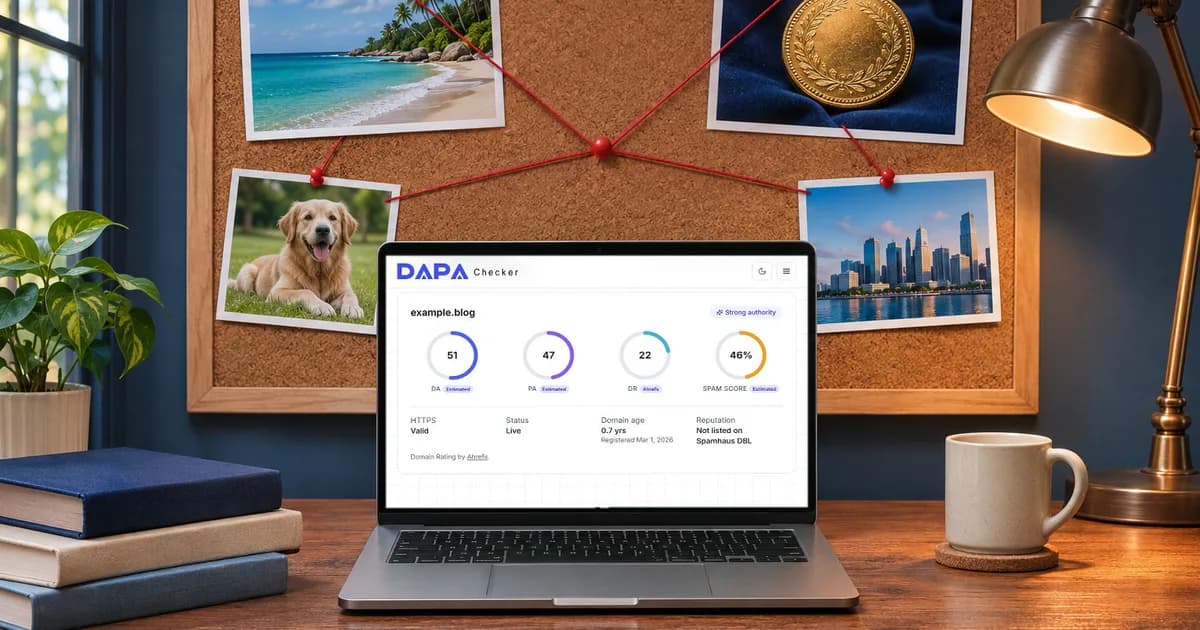
Domain Authority is not a Google ranking factor. It is a score made by Moz, a private SEO software company, and Google neither reads it nor publishes anything like it. Moz says the same thing on its own Domain Authority page.
That answer surprises people because high DA sites so often rank well. The reason is simple: DA and Google both pay attention to links. They are looking at overlapping evidence, so their conclusions often line up. When they don't, Google wins every time.
Why the Confusion Exists
For years Google showed a public PageRank score in its toolbar. When that was retired, the SEO industry needed a stand-in, and third-party scores filled the gap. Moz's DA became the most quoted, followed by Ahrefs' Domain Rating and others.
Over time, people started talking about DA as if it were the score Google uses. Link sellers price placements by it, clients ask agencies to raise it and site buyers value domains on it. None of that makes it a Google input. It makes it a popular shorthand.
Visual guide
A Proxy, Not a Factor
Google Ranks Pages
Google uses its own systems and never reads Moz scores.
Moz Predicts
DA models how link profiles tend to relate to rankings.
You Decide
Use DA to compare sites, then check relevance and traffic.
Why DA Still Lines Up With Rankings
Moz builds DA by training a model on real search results. In plain terms, it asks: which link profile features tend to show up on domains that rank well? Then it scores every domain on how much it looks like those winners.
That design means DA will correlate with rankings by construction. It does not mean:
- raising DA causes higher rankings,
- a higher DA site will outrank a lower DA site on any given query, or
- Google sees the same links Moz sees.
Google crawls far more of the web than any SEO tool, and it ignores or discounts many links that third-party indexes still count. A site can carry a high DA built on links Google has already set aside.
Where DA and Google Disagree
These are the situations where trusting DA will mislead you most often:
1. Relevance Beats Raw Authority
Google ranks pages for queries. A small, focused site with DA 20 often outranks a DA 70 generalist on a specific topic because its page answers the query better. DA has no idea what a page is about.
2. Manipulated Link Profiles
Bought links, private blog networks and expired domain tricks can push DA up quickly. Google's spam policies describe these as link spam, and its systems work to neutralize them. The DA can stay high while the search value falls to near zero. Our guide on how to spot a PBN covers the warning signs.
3. Penalized or Demoted Sites
A site hit by a manual action or an algorithm update can lose most of its Google traffic overnight. Its DA usually doesn't move, because its backlinks are still there.
4. New Sites With Strong Content
A new site starts near DA 1 but can rank for long-tail queries within weeks if it publishes useful pages. Low DA is not a ceiling. See DA for new websites for realistic timelines.
What Google Does Look At
Google publishes guidance on how its systems work in its How Search Works documentation and in its guidance on creating helpful, reliable content. Links are one signal among many. Others include how well the page matches the query, the quality and originality of the content, page experience and the searcher's location and language.
What DA Sees vs What Google Weighs
Moz Domain Authority
- Links found in Moz's own index
- A model trained on real search results
- One number for a whole domain
Google's own systems
- Links, as one signal among many
- How well the page matches the query
- Quality and originality of the content
- Page experience
- The searcher's location and language
Notice that none of these can be read off a single domain-level number. That is the core limit of any authority score: it summarizes links, and links are only part of the picture.
How to Use DA Without Being Misled
DA earns its place as a fast way to compare sites. Used as a final answer, it will eventually cost you money, usually on a link or a domain that looked strong on paper and did nothing once you owned it.
- Compare your site with the sites ranking for your target queries, rather than aiming for a fixed number. DA is relative, so "DA 50" means little without context.
- Look at DR next to DA. When two independent link indexes roughly agree, the authority is more likely real. Our DA vs PA vs DR guide explains the differences.
- Add a risk check. High DA with a high Spam Score is a red flag, not a bargain.
- Look for real traffic. If Google already sends a site visitors, that tells you more about how Google sees it than any third-party score can.
- Judge the page as well as the domain. For link placements and rankings, the specific page matters. Check Page Authority and whether the page itself is linked to.
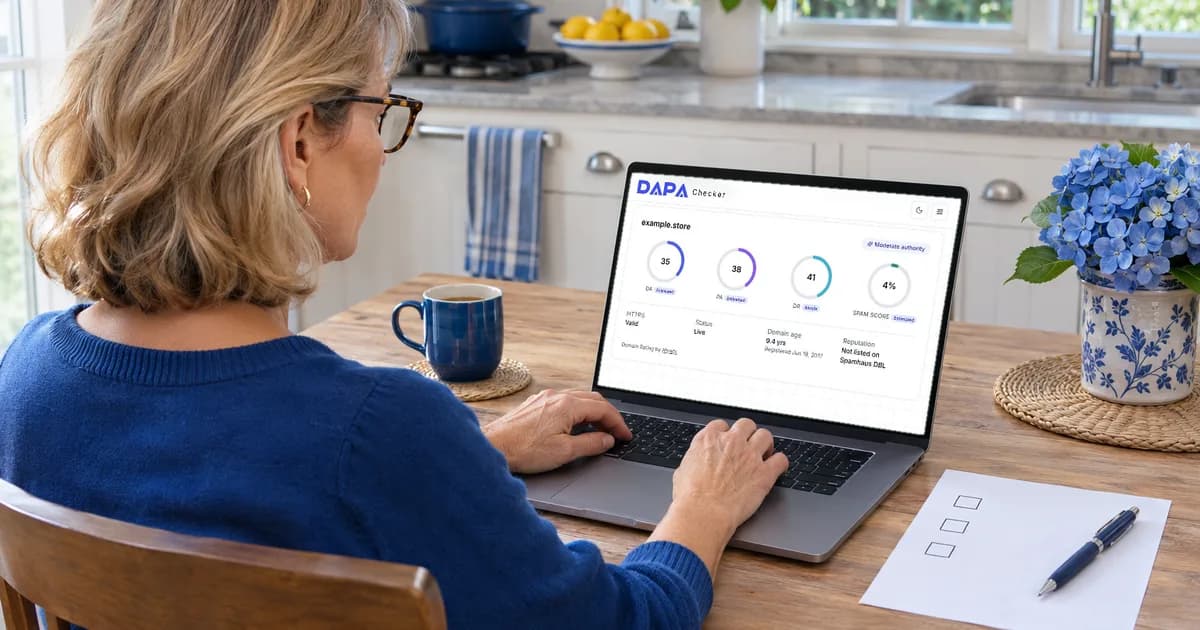
You can see DA, PA, DR and Spam Score together for any site with our free DA PA checker. Every number is labeled with its source, and estimates are marked as estimates.
Frequently Asked Questions
Will Increasing My DA Improve My Google Rankings?
Not directly. The things that raise DA, mainly earning links from strong, relevant sites, can also help rankings. But you can raise DA in ways that do nothing for Google, and you can improve rankings without DA moving.
Does Google Have Its Own Version of Domain Authority?
Google has said in the past that it doesn't use a single domain-wide authority score in the way SEO tools describe. Whatever it uses internally is not public, and no third-party score is a copy of it.
Why Did My DA Go Up While My Traffic Went Down?
The two measure different things. DA can rise as Moz finds more links, while traffic falls due to an algorithm update, lost relevance or competitors. Read why DA changes for the common causes.
Is DR a Google Ranking Factor?
Domain Rating is an Ahrefs metric, so the same logic applies to it as to DA.
What to Tell a Client Who Asks About DA
When a client asks why their DA went up and their rankings didn't, the straight answer is that Google has never looked at that number, and the work that moves rankings (relevant pages, real links, a site people want to visit) only sometimes shows up in it.